
Event Date
March 23, 2021
9:00 am to 11:30 am Pacific Standard Time
2021 Distinguished Lecturers
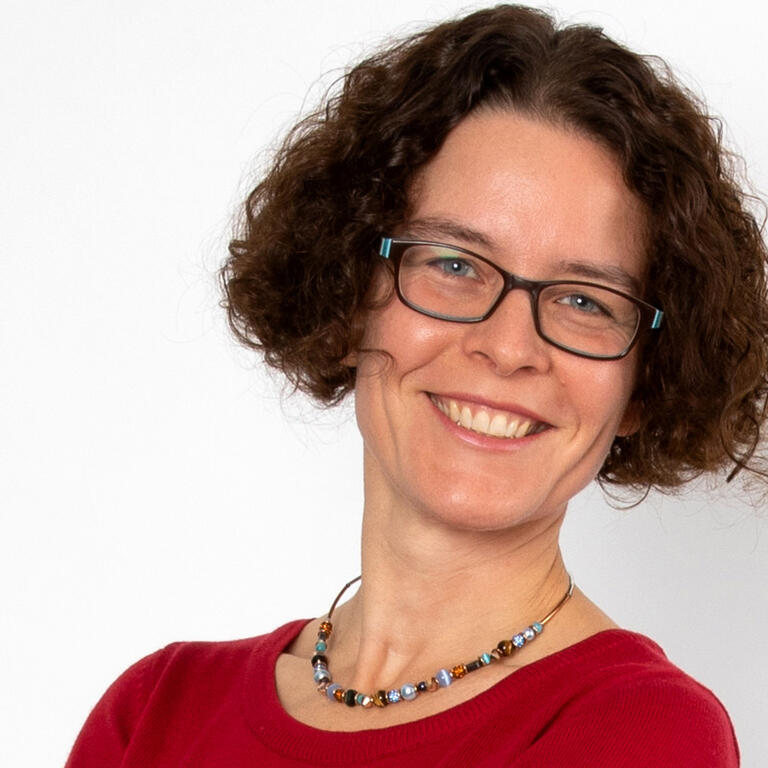
“Heterogeneous Catalysis and Process Design for Closed CO2 Cycles”
Renewable carbon feedstocks such as biomass and CO2 present an important element of future circular economy. Especially biomass as highly functionalized feedstock provides manifold opportunities for the transformation into attractive platform chemicals. However, these resources require novel paradigms in process design. Fossil feedstocks are processed in stationary gas-phase processes at elevated temperature. On the contrary, biorefineries are based on processes in polar solvents at moderate conditions to selectively deoxygenate the polar, often thermally instable and high-boiling molecules. Considering “green electrons” provided by renewable energy technologies, also dynamic (electro)catalytic processes become attractive as key technology of a throughout circular economy. Herein, novel concepts in catalyst design will be discussed focusing on solid molecular catalysts for CO2 activation, novel biomass transformations and the contribution of catalysts in life cycle assessment as well as the future role of a potentially electrified biorefinery.
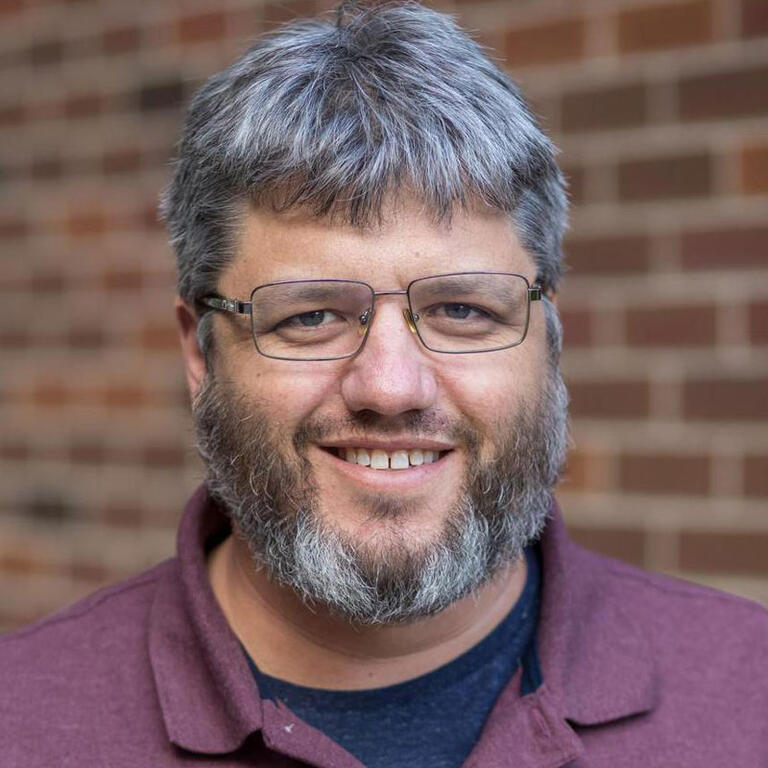
“The Catalytic Mechanics of Dynamic Surfaces for Energy Technology”
The emergence of competitive renewable energy from sunlight and wind heightens the importance of moving and storing energy from the rural places of origin to the locations where people live and work. Chemically capturing energy as compressed hydrogen or energy-dense liquids including ammonia or CO2-derived methanol remains a leading method of energy storage based on density and fungibility, but the catalytic technology necessary for transforming electricity into chemicals in small distributed energy systems remains the key challenge. In this work, the general approach of dynamic catalyst operation is described as oscillatory binding energy of molecules adsorbed on surfaces as a method to dramatically accelerate the rate of catalytic reaction. Surface oscillations in sinusoidal and square waveforms of transient binding energy are imposed on catalyst surfaces with varying amplitude and frequency to identify the resonance conditions leading to order-of-magnitude enhancement in overall reaction rate. The results are presented in the context of catalyst-reaction behavior with regard to implementation in industrial reactor technologies necessary for moving and storing renewable energy.
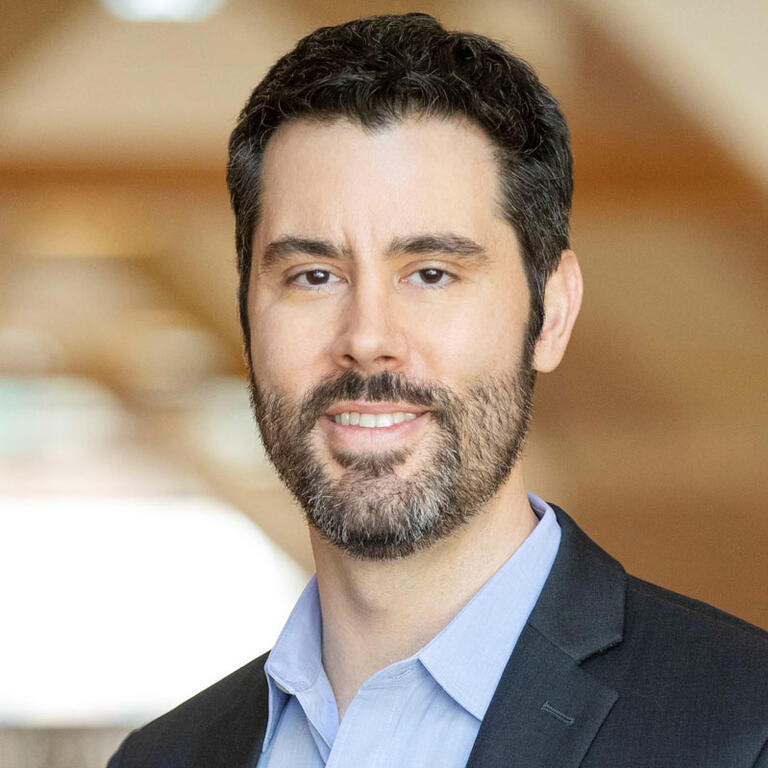
“Why Does the Catalyst Need to Be Wet?
Solvent molecules surround and interact with catalytic active sites in ways that change reaction rates and selectivities by orders of magnitude. This seminar describes complex and previously unrecognized phenomena at solid-liquid interfaces during the direct synthesis of H2O2 (H2 + O2 → H2O2), an environmentally benign oxidant. H2O2 forms on Pd-based nanoparticles with structures that evolve in response to the reactant and solvent compositions. Alcoholic solvent molecules activate to form surface redox mediators that co-catalyze proton-electron transfer steps and influence the active phase of the catalyst nanoparticle. Water, in contrast, co-catalyzes and couples the hydrogen oxidation and oxygen reduction reactions on individual nanoparticles, analogous to electrochemical fuel cells. Comparisons of independent electrochemical and thermochemical measurements across alloy catalysts demonstrate fundamental connections between electro- and thermocatalytic processes for this chemistry. These concepts explain the dependence of rates and selectivities not only on operating conditions (temperature, reactant pressure, potential) but also on catalyst structure (e.g., Pd-Pd coordination). While we demonstrate these principles for an ostensibly simple reaction, such ideas may appear also for liquid-phase catalysis of other feedstocks.
2021 Distinguished Lecturer Bios
 Regina Palkovits is Full Professor for Heterogeneous Catalysis & Chemical Technology at RWTH Aachen University. She graduated in Chemical Engineering (Dipl.-Ing.) from Technical University Dortmund, Germany, in 2003. During studies, she spent a semester at Lehigh University, PA/USA. She carried out her PhD under supervision of Prof. Ferdi Schüth at the Max-Planck-Institut für Kohlenforschung (Mülheim an der Ruhr/Germany) until 2006. Afterwards, she joined the group of Prof. Bert Weckhuysen at Utrecht University, Netherlands, as postdoctoral fellow funded by a Hendrik Casimir-Karl Ziegler Fellowship. In 2008, she returned as a group leader to the Max-Planck-Institut für Kohlenforschung and since 2010 she is Professor at RWTH Aachen University. Her research focusses on the design of catalysts and processes for the efficient valorisation of renewable carbon resources. She published 170 articles in international peer-review journals, 9 books or book chapters and filed more than 25 patent applications. Professor Palkovits currently heads the Sustainable Chemistry Division of GDCh (German Chemical Society) and is vice-chair of the scientific advisory committee of Leibniz Institute for Catalysis (LiKat). She is Associate Editor for the RSC journal Catalysis Science & Technology, member of the national research building committee and core member of the Cluster of Excellence Fuels Science Center. She received numerous awards, including the 2019 EFCATS Young Researcher Award, the 2019 ExxonMobil Chemical European Science & Engineering Award, the 2016 DECHEMA Award, and the Innovation Prize of the State of North Rhine-Westphalia in the Young Researchers category. Since 2019, she is a Max Planck Fellow at the Max Planck Institute for Chemical Energy Conversion and as of 2020, a member of the North Rhine-Westphalian Academy of Sciences, Humanities and the Arts.
 Paul Dauenhauer received a bachelor of science in chemical engineering and chemistry from the University of Wisconsin in 2004 and a Ph.D. in chemical engineering from the University of Minnesota in 2008 supervised by Professor Lanny D. Schmidt. From 2008 to 2009, Paul worked as a senior research engineer for the Dow Chemical Company within Core R&D Reaction Engineering in Midland, MI, and the Hydrocarbons & Energy group in Freeport, TX. In 2009, he joined the University of Massachusetts Department of Chemical Engineering as an assistant professor. Since joining the University of Minnesota Department of Chemical Engineering & Materials Science in 2014, he has served as the Lanny Schmidt Honorary Professor, MacArthur Fellow, and the co-Director of the Catalysis Center for Energy Innovation. His published patent applications serve as the scientific foundation of three startup companies: Sironix Renewables, Activated Research Company, and enVerde, LLC.
 David Flaherty earned a bachelor of science in chemical engineering from the University of California at Berkeley and a Ph.D. in chemical engineering from the University of Texas at Austin with Professor Buddie Mullins. He was a postdoctoral scholar at the University of California, Berkeley with Prof. Enrique Iglesia. Since 2013, joining as the Dow Chemical Company Faculty Scholar and Associate Professor of Chemical and Biomolecular Engineering at the University of Illinois, Flaherty leads a group that develops understanding and design principles for the use of solid catalysts to resolve challenges for the sustainable production of chemicals and energy carriers. His research focuses on generating new insight to the chemical phenomena that emerge when reactions occur at complex surfaces and at liquid-solid interfaces. Prof. Flaherty is the recipient of the DOE Early Career Award (2019), NSF CAREER Award (2016), the AVS, Prairie Chapter, Early Career Research Award (2018), the Dean's Award for Research Excellence from the College of Engineering (2018), and the Doctoral New Investigator Award of the ACS-PRF (2014), in addition to recognition for his contributions as a teacher and advisor.
Schedule
March 23, 2021
9:00 am – 9:05 am
Opening Remarks and Introduction of Prof. Regina Palkovits
9:05 am – 9:35 am
“Heterogeneous Catalysis and Process Design for closed CO2 cycles” — Prof. Regina Palkovits
9:35 am – 9:45 am
Q&A and Introduction of Prof. Paul Dauenhauer
9:45 am – 10:15 am
“The Catalytic Mechanics of Dynamic Surfaces for Energy Technology” — Prof. Paul J. Dauenhauer
10:15 am – 10:25 am
Q&A and Introduction of Prof. David Flaherty
10:25 am – 10:55 am
“Why Does the Catalyst Need to Be Wet? Activities, Active Sites and Non-Innocent Solvents” — Prof. David W. Flaherty
10:55 am – 11:05 am
Q&A and Panel Discussion Introduction by Prof. Alexis T. Bell
11:05 am – 11:10 am
Panel Discussion Presentation by Speakers: “Future Research Directions in Catalysis”
11:10 am – 11:30 am
Open Panel Discussion and Concluding Remarks
Past Eastman Distinguished Visiting Lecturers

2010 – James Dumesic
2012 – Avelino Corma
2013 – Matthew Neurock
2014 – Bruce C. Gates
2015 – Mark Davis
2016 – Johannes Lercher
2017 – Jingguang Chen
2018 – Harold H. Kung
2020 – Susannah Scott
Generous support for this visiting lecturer series is provided by the Eastman Foundation.